

One of the most persistent misunderstandings about veganism is the idea that it demands perfection.
Critics point to insects killed in crop production, animal-derived ingredients hidden in medications, tires, electronics, roads, construction materials, and countless other parts of modern life. Then comes the familiar conclusion: if a vegan cannot avoid every single instance of animal harm, veganism must somehow be hypocritical.
But that argument depends on pretending veganism claims something it never claimed.
The widely accepted definition of veganism includes an important qualification: avoiding animal exploitation and cruelty as far as is possible and practicable.
Those words matter.
Veganism Is an Ethical Direction
Veganism is not a purity contest. It is an ethical position.
The principle is simple: when we can reasonably avoid exploiting or harming animals, we should.
None of us can live without causing some harm. Simply being alive has consequences. We occupy land, use transportation, consume resources, and participate in economic systems that are far from perfect.
But the fact that we cannot eliminate every harm does not excuse the harms we can easily avoid.
I cannot guarantee that no insect was killed producing the vegetables I eat. That does not mean I need to buy a steak.
I cannot control every ingredient used in manufacturing my computer. That does not mean I need to buy a leather jacket.
Ethics has never required perfection before responsibility becomes meaningful.
“Possible” Does Not Mean Convenient
But there is another mistake people make with those words.
“Possible and practicable” does not mean, “I will avoid animal exploitation only when it requires absolutely no effort.”
Ethics often requires some effort.
Changing what we buy, learning new recipes, reading labels, choosing different clothing, or finding alternatives can be inconvenient. That alone does not make something impracticable.
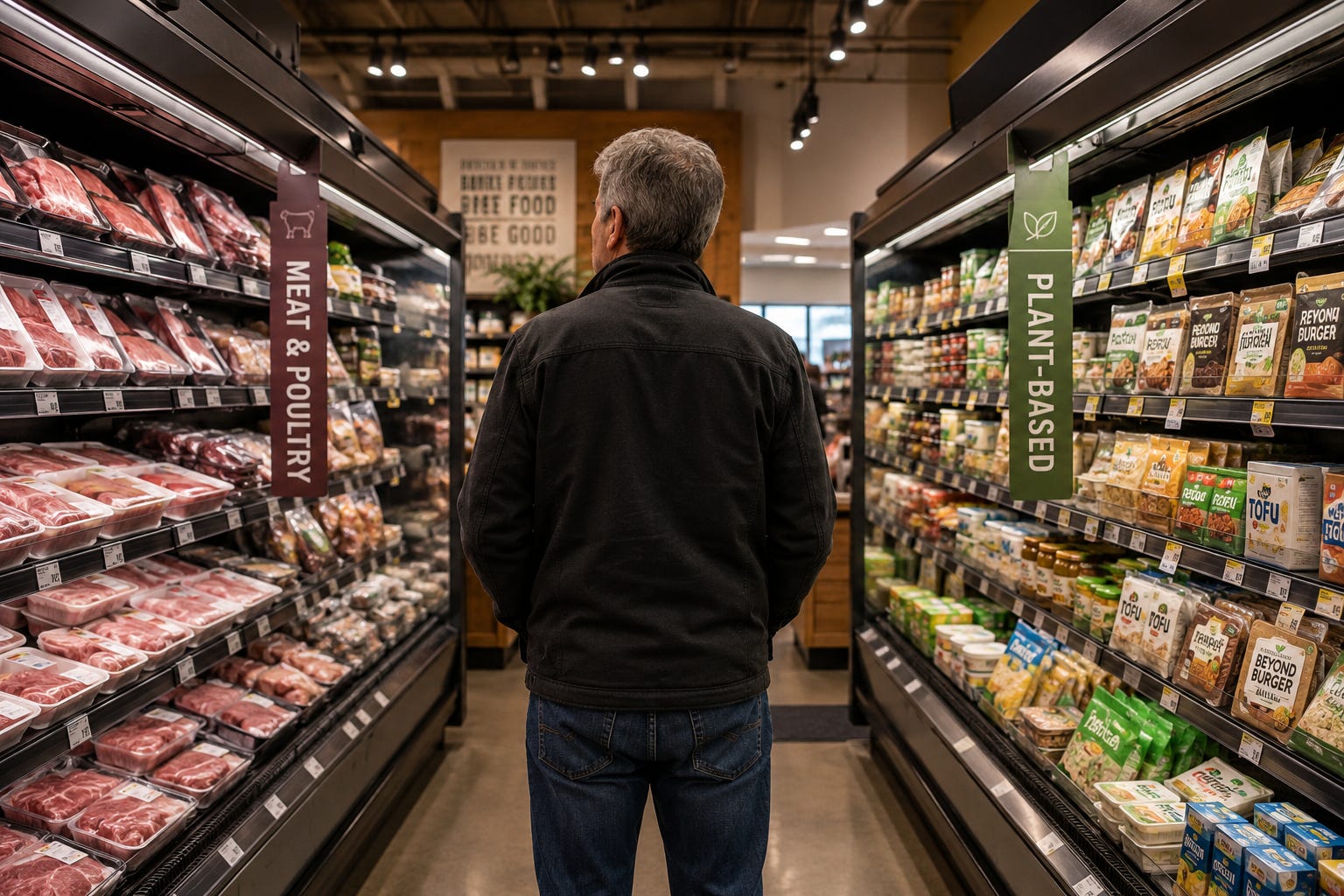
If a plant-based meal is available but someone chooses animal flesh because they prefer the taste, that is not a problem of practicability. It is a preference.
There is an important difference between cannot and would rather not.
A person who needs a medication containing an animal-derived ingredient may have no reasonable alternative. Someone living in extreme poverty or in a region with very limited food access may face choices very different from those available to someone standing in a well-stocked American supermarket.
Vegan ethics recognizes those realities.
What it does not do is turn ordinary preference into necessity.
Ready to Put Compassion Into Practice?
Download The 7-Day Compassion Challenge, a free practical workbook from The Vegan’s Voice. Over seven days, you’ll take simple, manageable steps to connect your values with your everyday choices, without guilt, pressure, or demands for perfection.
Get your free copy here: https://payhip.com/b/NgGQ5
The Perfection Trap
Anti-vegan arguments often rely on what could be called the perfection trap.
“If your lifestyle causes any animal deaths at all, why bother?”
We do not think this way about much of anything else.
We cannot eliminate every traffic death, but we still use seat belts and speed limits.
We cannot eliminate every form of pollution, but we still try to reduce emissions.
We cannot prevent every act of violence, but we still oppose violence.
The same logic applies here.
Reducing preventable harm still matters even when eliminating all harm is impossible.
The real ethical question is not whether we can live without affecting anything else. We cannot.
The question is whether we are causing harm that we could reasonably choose not to cause.
That is the question worth asking.
Animals Are Not Ingredients in an Argument
Sometimes discussions about veganism become so abstract that the animals disappear completely.
We debate definitions, nutrition, farming systems, economics, tradition, personal liberty, and hypothetical survival situations.
Meanwhile, billions of animals continue to be bred, confined, used, and killed because humans want products made from their bodies.
“Possible and practicable” brings the issue back to something much simpler.
Can I eat something else?
Can I wear something else?
Can I buy something else?
Can I choose entertainment that does not depend on animal exploitation?
Can I avoid supporting this particular harm?
If the answer is yes, then veganism asks us to act accordingly.
Not because we are trying to become morally flawless, but because another sentient being should not suffer or die simply because changing our habits feels inconvenient.
Progress, Not Moral Perfection
There will always be difficult cases.
Medicine is one. Food access can be another. Some people live with disabilities, allergies, poverty, geographic isolation, or other circumstances that affect what is realistically available to them.
Veganism has room for reality.
What it does not have room for is using someone else’s difficult circumstances as an excuse for our own unnecessary choices.
A person who genuinely cannot avoid a particular animal-derived product is not the ethical problem.
The problem is the person who easily could avoid exploitation but insists that because someone somewhere cannot, nobody has any obligation to try.
That is not a serious ethical argument. It is an excuse.
The Question Is Actually Very Simple
Veganism does not ask us to become perfectly harmless.
None of us can do that.
It asks us to stop causing harm when we have a reasonable way not to.
That is what “possible and practicable” means.
If we genuinely have no choice, that matters. But when we do have a choice, convenience, habit, and taste are not the same thing as necessity.
We do what we reasonably can.
And when another animal’s life or suffering is involved, that is not asking too much.
I know some may not want to commit to a paid subscription, but if you’d like to support my work, you can always buy me a coffee on Ko-fi. Your contribution helps sustain independent writing rooted in consciousness, compassion, and social renewal. Every bit of support truly makes a difference. Thank you!
Were perfection necessary to do anyone good, we need not reproduce.
The example I often give is this: if ten people are in mortal danger in a burning house, and we only have the physical means to save nine, should we choose to let all ten die because we couldn't save them all? And then be criticized afterward because one of them died, while forgetting the other nine?