

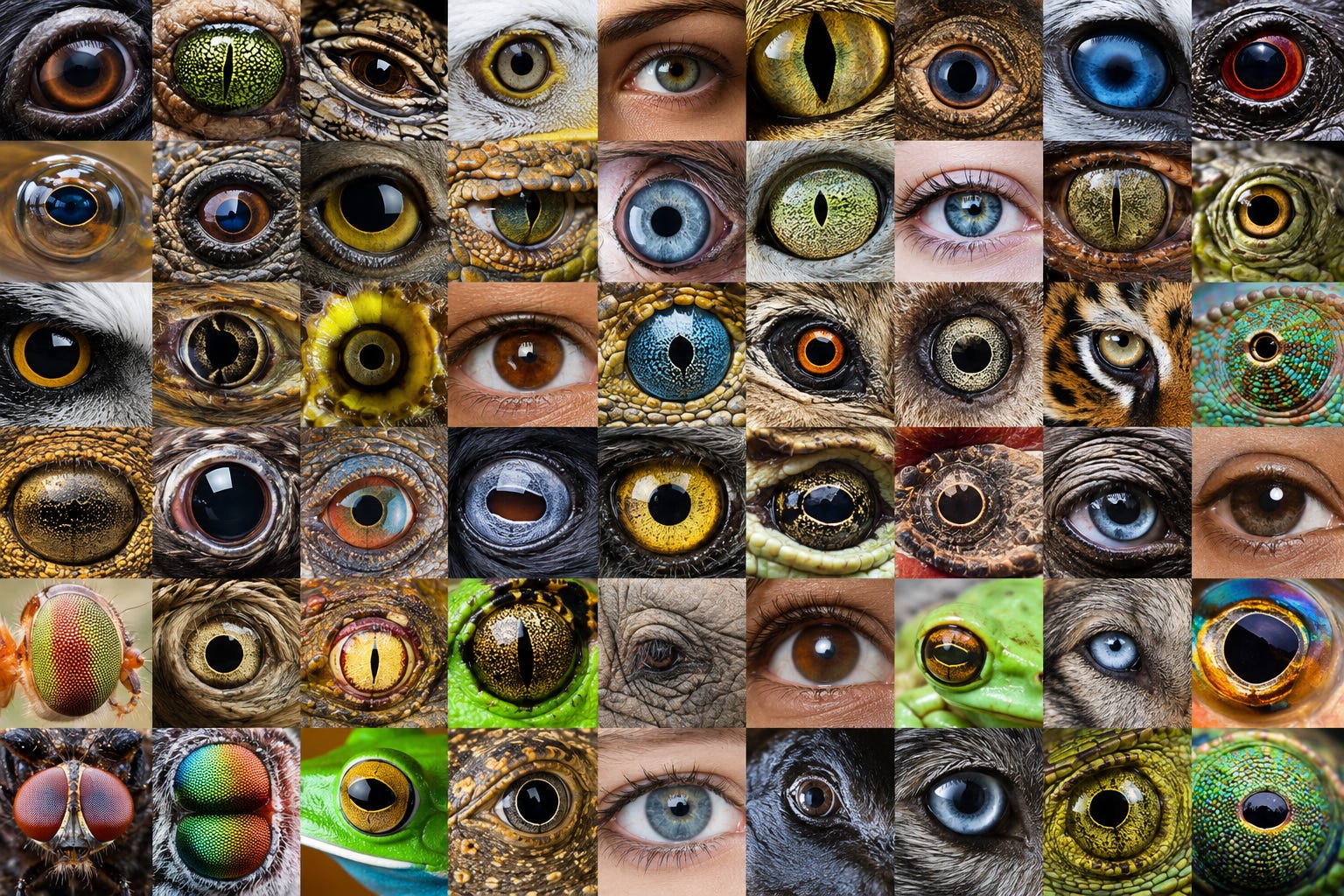
Every sentient being counts.
Most moral progress begins with an uncomfortable question: Who have we left out?
Throughout history, societies have drawn narrow boundaries around those considered worthy of dignity and protection. Race, sex, religion, nationality, wealth, and social status have all been used to decide whose suffering mattered and whose could be overlooked. Progress came when people challenged those boundaries and recognized that familiar customs were not necessarily moral ones.
Sentientism asks us to continue that work by examining one of the oldest boundaries of all: the line humanity has drawn between itself and every other animal capable of experiencing life.
A Simple Moral Starting Point
Sentientism rests on a straightforward principle: evidence, reason, and compassion for all sentient beings. It combines a rational approach to understanding the world with an ethical commitment to beings capable of suffering or flourishing.
Instead of asking whether a being belongs to our species, Sentientism asks whether that being can experience pain, fear, pleasure, comfort, loneliness, or well-being. When the answer is yes, that life deserves moral consideration.
This does not weaken the case for human rights. It extends the reasoning behind them. We reject racism and sexism because a person’s important interests should not be dismissed because of irrelevant biological differences. Species membership deserves the same scrutiny.
A pig’s pain does not become insignificant because the pig cannot speak our language. A chicken’s fear is not imaginary because humans profit from ignoring it. A fish should not have to solve an equation before its suffering becomes worthy of concern.
What the Science Tells Us
The scientific case for animal consciousness has become increasingly difficult to dismiss. The 2024 New York Declaration on Animal Consciousness stated that there is strong scientific support for conscious experience in mammals and birds. It also recognized a realistic possibility of consciousness in all vertebrates and in many invertebrates.
We may never know exactly how another animal experiences the world. We cannot enter the mind of a cow, octopus, crow, or even another human being. Yet uncertainty does not justify indifference. When there is a reasonable possibility that a being can suffer, we should consider that possibility before making decisions that may cause pain, confinement, fear, or death.
Giving animals the benefit of the doubt is not sentimental thinking. It is a responsible response to uncertainty when the cost of being wrong can be severe.
Beyond Pets and Farmed Animals
Sentientism offers a more consistent foundation for animal ethics than affection, tradition, or convenience. Most people understand that dogs and cats have emotions and can suffer. Yet many of those same people support systems that confine, mutilate, exploit, and kill other animals with comparable capacities.
We protect one animal, eat another, experiment on a third, and rarely stop to ask why the categories are so different. The distinctions usually come from habit, culture, and profit, not from a defensible moral principle.
Sentientism challenges us to be more honest about those contradictions.
Veganism as a Practical Response
Veganism is one of the clearest practical expressions of Sentientism. Once farmed animals are understood as conscious individuals rather than agricultural products, using them for food becomes much harder to justify, particularly where nutritious plant-based alternatives are available.
This does not require us to pretend that every moral choice is simple. Access, health, poverty, geography, and cultural circumstances can complicate personal decisions. Still, complexity should encourage thoughtful action, not become a permanent excuse for doing nothing.
Sentientism also reaches beyond food. It challenges animal experimentation, entertainment based on captivity, commercial breeding, habitat destruction, and methods of pest control that disregard suffering. It encourages legal systems to recognize animals as beings with interests, rather than treating them only as property or sources of profit.
A Philosophy for the Future
Sentientism may also help us prepare for future moral questions. Humanity may someday create artificial intelligence capable of genuine subjective experience. We may eventually encounter forms of life very different from ourselves.
If those beings can experience suffering or well-being, Sentientism would include them within the moral community. The source of a mind should matter less than the fact that a mind exists.
This gives Sentientism a flexibility that many older moral systems lack. It does not tie moral worth to appearance, biology, language, nationality, or origin. It asks us to look for the capacity to experience.
Compassion Guided by Reason
Another strength of Sentientism is that it connects compassion with intellectual honesty. Compassion alone can become selective or sentimental. Reason alone can be used to defend cruel systems with impressive-sounding arguments. We need both.
Evidence helps us understand which beings are likely to be conscious and how our choices affect them. Compassion gives us a reason to care about what that evidence reveals.
Sentientism is not a complete rulebook for every ethical conflict. It cannot automatically tell us how to weigh every competing interest or resolve every ecological dilemma. It does, however, give us the right place to begin: every sentient being counts.
No conscious life should be excluded simply because it is unfamiliar, voiceless, inconvenient, or profitable to exploit.
The Next Step in Moral Progress
Humanity often congratulates itself for widening the moral circle while quietly remaining at its center. Sentientism invites us to take another step. It does not diminish human dignity. It places that dignity inside a broader ethic of compassion, responsibility, and respect for conscious life.
The most important moral question should not be, “Is this being human?”
It should be, “Can this being experience what we are about to do?”
For more about Sentientism, visit: Sentientism.info and Sentientism’s wiki page
Discover the truth about veganism beyond just a diet. This practical guide explains ethical principles, daily choices, and compassionate living, giving beginners the tools and understanding to embrace a lifestyle that respects animals, the planet, and personal integrity. Download Veganism: A Practical Introduction.
Ready to put those principles into practice? The Vegan’s Voice Vegan Starter Pack is a professionally designed 24-page guide featuring a 30-day action plan, essential nutrition guidance, 12 affordable recipes, grocery lists, food substitutions, social tips, and printable planning tools.
You may also like to arm yourself with: 25 Vegan Myths Debunked!, a comprehensive guide that cuts through confusion with clear, compassionate, and practical answers to the arguments people hear every day. From protein and nutrition to cost, taste, ethics, farming, and environmental impact, this guide separates facts from fear and helps readers respond with confidence.
Before you head out, hit the ❤️ and re-stack this post to amplify The Vegan’s Voice and bring this conversation to more people who need to hear it. And please check out my vegan outreach page on Facebook.
I know some may not want to commit to a paid subscription, but if you’d like to support my work, you can always buy me a coffee on Ko-fi. Your contribution helps sustain independent writing rooted in consciousness, compassion, and social renewal. Every bit of support truly makes a difference.
Wonderful piece Michael. Such painfully slow progress. Animist cultures across the planet recognize personhood in every living being. So for the vast majority of our history (at least 70 thousand years) we have enjoyed an understanding of personhood across the full spectrum of the web of life. The suppression and distortion of this seminal knowledge is the great tragedy of humanity, as it in the present, neurotically destroys and exploits and enslaves its fellow earthlings, and in so doing, destroys the soul of humanity. What insanity. Hopefully soon we awake from this self-abusive Cartesian nightmare.
From https://substack.com/@palanajana ...
Can Farmed Animals Suffer More Than Humans? 4 Reasons We May Have Radically Underestimated Animal Agony
https://veganhorizon.substack.com/p/can-farmed-animals-suffer-more-than