
Credibility at Stake: Influencers and the Future of Vegan Messaging
Online debates reveal tension between aesthetics, health trends, and ethical veganism

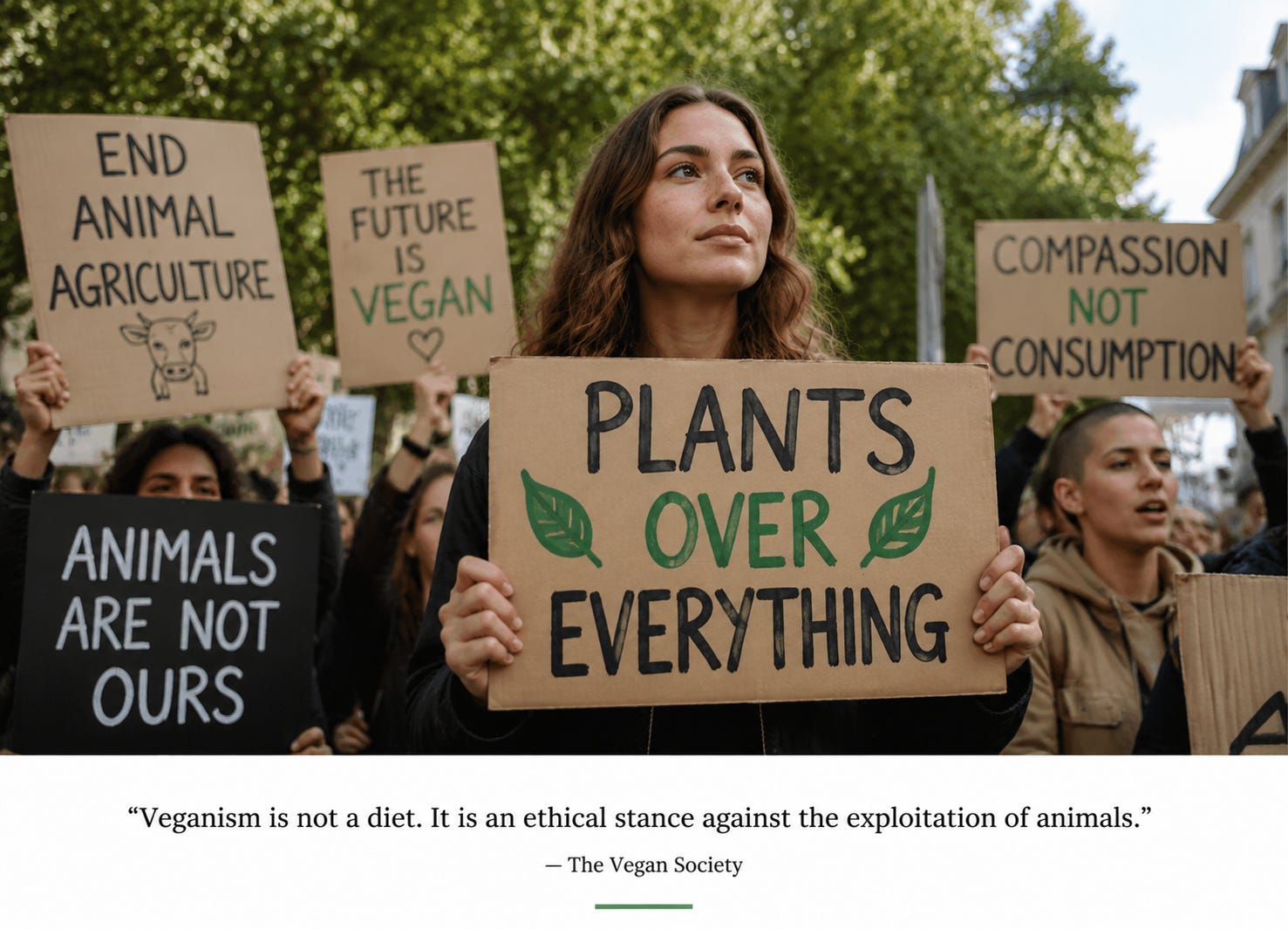
Online communities focused on vegan and plant-based lifestyles are increasingly debating a theme that could shape public understanding of the movement. Critics argue that when influencers mix messages about diet, identity, and ethics, they may weaken the clarity of what veganism stands for. These discussions are not driven by a single breaking news event. Rather, they stem from historical controversies and ongoing social media debates about how influencers present themselves and what values they emphasize.
At the heart of the conversation is a simple question. What does it mean to be a vegan or plant-based influencer in 2026? For many participants in forums, the answer has become less clear as health, trend content, and ethics intersect on platforms such as TikTok, YouTube, Instagram, and Reddit.
“When plant-based content emphasizes trends over ethics, the public sees a diet, not a movement.”
One long-standing example that still shapes discussion is the case of Yovana Mendoza, known online as Rawvana. Once a popular advocate of a raw vegan lifestyle, she faced intense backlash when photos surfaced of her eating fish and other animal products. “I was dealing with health issues,” she later explained, citing anemia and menstrual irregularities as reasons for her dietary changes. To critics her actions were a betrayal of the audience she built by promoting vegan and plant-based content.
This episode remains a reference point in vegan circles as a cautionary tale about influencer accountability.
When Plant-Based Messaging Clouds Ethical Identity
The first key theme in the debate is how vegan and plant-based identities are understood and communicated. Many recent discussions on Reddit highlight frustration at influencers who promote plant-based meals or recipes without engaging with the ethical core of veganism. In one active thread, a user wrote, “It is depressing how so many plant-based accounts treat veganism like a diet trend without ever mentioning animal rights.” This comment reflects a sentiment shared by many participants who feel that ethical veganism has been overshadowed by food aesthetics and wellness content.
The distinction between plant-based and ethical vegan is central to this critique. Plant-based content focuses on the absence of animal products in food, often highlighting taste, accessibility, and health, while ethical veganism includes a commitment to animal welfare in clothing, cosmetics, entertainment, and consumption of all kinds. Critics argue that when influencers emphasize the first and ignore the second, they inadvertently reduce veganism to a lifestyle choice rather than a moral stance.
One Reddit participant summed it up this way. “If your content never mentions why veganism matters beyond nutrition, is it really representing veganism at all?” That question reverberates across multiple threads in vegan communities where users strongly prefer content that reflects principles of justice for animals rather than just dietary advice.
At the same time, some community members push back against what they see as overly rigid definitions. A comment that received significant support in another discussion read, “Plant-based messaging brings more people in. Maybe they will learn about ethics later.” This perspective suggests that focusing on food and health may be a gateway to deeper engagement with ethical issues.
What’s your take on this video?
Answer in the comments below.
Public Perception and the Role of Influencers
How influencers frame vegan and plant-based lifestyles matters because they shape the first impression many people outside the movement have about these concepts. Research into public perception shows that non-vegans often associate veganism with health, diet, or personality trends rather than ethical imperatives. When widely followed personalities emphasize aesthetics or fitness benefits without discussing animal rights, the broader public may continue to see veganism as another wellness fad.
Influencers themselves react to these dynamics in varied ways. Some are explicit about how they label their content to avoid confusion. A post in a vegan Q and A thread quoted an influencer saying, “I post mostly plant-based recipes but I do not identify as vegan because my lifestyle choices are personal.” Others in the thread described interactions where creators responded defensively when asked about strict ethical veganism.
These varied responses illustrate a broader challenge. Many influencers are navigating how to be authentic to their personal journeys while responding to audience expectations and brand opportunities. Some creators have clarified that they choose “plant-based” as a descriptor because it is less polarizing than vegan, especially in mainstream contexts where the ethical roots of veganism are less understood.
Critics argue that this approach comes with trade-offs. When the ethical message is absent or downplayed, some say, the public interpretation of veganism becomes shallower. One commenter wrote, “When plant-based content gets all the attention but ethical veganism gets lost, we lose the real reason we were here in the first place.”
The Balance Between Inclusivity and Clarity
The debate raises a deeper question about the direction of the vegan movement and how it balances inclusivity with philosophical clarity. Supporters of a broader plant-based emphasis argue that incremental change still results in less harm. They point to studies showing that even partial reduction of animal products correlates with lower environmental impact and reduced animal suffering compared to a typical omnivore diet.
Yet others in the movement stress that without a clear articulation of vegan ethics, the long-term goals of animal justice are harder to achieve. They argue that if influencers treat veganism as primarily a diet trend, the structural issues of exploitation, factory farming, and animal rights remain peripheral in public consciousness.
Some vegan advocates are exploring ways to support influencers who commit to ethical clarity while still making their content accessible and engaging. Suggested approaches include providing guidelines for ethical representation, highlighting creators who link vegan eating to broader moral frameworks, and encouraging transparent communication about personal identities and choices.
There is also a shift among brands and companies that partner with influencers. A number of plant-based food producers now prefer to work with influencers who explicitly integrate ethical considerations into their content. This reflects a broader demand among consumers for authenticity and transparency in messaging.
What Comes Next
For now, the conversation about influencer credibility in vegan and plant-based spaces remains lively and unresolved. There is no single mainstream scandal dominating headlines. Instead, what exists is a mosaic of community sentiment, historical examples, and ongoing debates that together shape how veganism is portrayed and understood online.
Whether these discussions lead to clearer standards of representation, more nuanced public understanding, or deeper engagement with ethical veganism, the outcome may influence how the movement evolves in the years ahead. As one participant in an online forum put it, “If we clarify why veganism matters, we do more than teach people how to eat. We teach them why to care.”
Before you head out, hit the ❤️ and re-stack this post to amplify The Vegan’s Voice and bring this conversation to more people who need to hear it.
I know some may not want to commit to a paid subscription, but if you’d like to support my work, you can always buy me a coffee on Ko-fi. Your contribution helps sustain independent writing rooted in consciousness, compassion, and social renewal. Every bit of support truly makes a difference.
"Let the one who is free of sin cast the first stone" seems appropriate to interject into this discussion. Purity tests are destructive and hypocritical.
An achievable ethical goal is to mitigate harm to the environment and to animals, as sentient beings, in our daily food and purchasing choices. The personal health benefits are a bonus.
Vegan advocates need to frame the ethical issues simply. Personal change is a long process. A simple ethical goal has to become first a reminder at the point of choice, and then a motivator to do more as one's understanding of the harm carnism causes deepens.
Cultural change follows the same arc.
I think lively discussions and debates about "plant-based" and "vegan" are, overall, healthy. They show that these concepts have profound meaning and implications. They also show that veganism, as a movement that is gathering steam, is finding its footing.
I see carnism as a type of inequality and social injustice that intersects with others. All forms of inequality are mutually reinforcing and must therefore be addressed simultaneously to prevent one form of inequality from reinforcing another. For example, tackling the gender pay gap alone (i.e., without including other dimensions such as race, socio-economic status, and immigration status), reinforces inequalities among women. A similar argument can be made for facets of veganism that address intersecting issues.
And yet, I think that a one-size-fits-all approach is unrealistic. Yes, information about those intersecting issues must be made available, but each person who comes to veganism does so in their own unique way. For me, it started with eschewing the patriarchal religious jingoism, sexism, and racism that I grew up with. It then expanded to environmentalism, then to health and a plant-based diet, and finally to animal ethics. This transpired over the course of some 30 years.
Certain tenets of veganism are ancient, although recasting them in today's world of over 8 billion people requires new thinking. We are in unfamiliar territory. Can we show each other (and ourselves) enough grace as we feel our way through together?