
Beyond the Burger: Why the Next Chapter of Plant Protein Could Be Bigger Than the First
Beyond is dropping “Meat” from its branding and expanding into drinks and bars. That move may signal not the decline of vegan business, but its evolution into something broader, smarter, and more dura

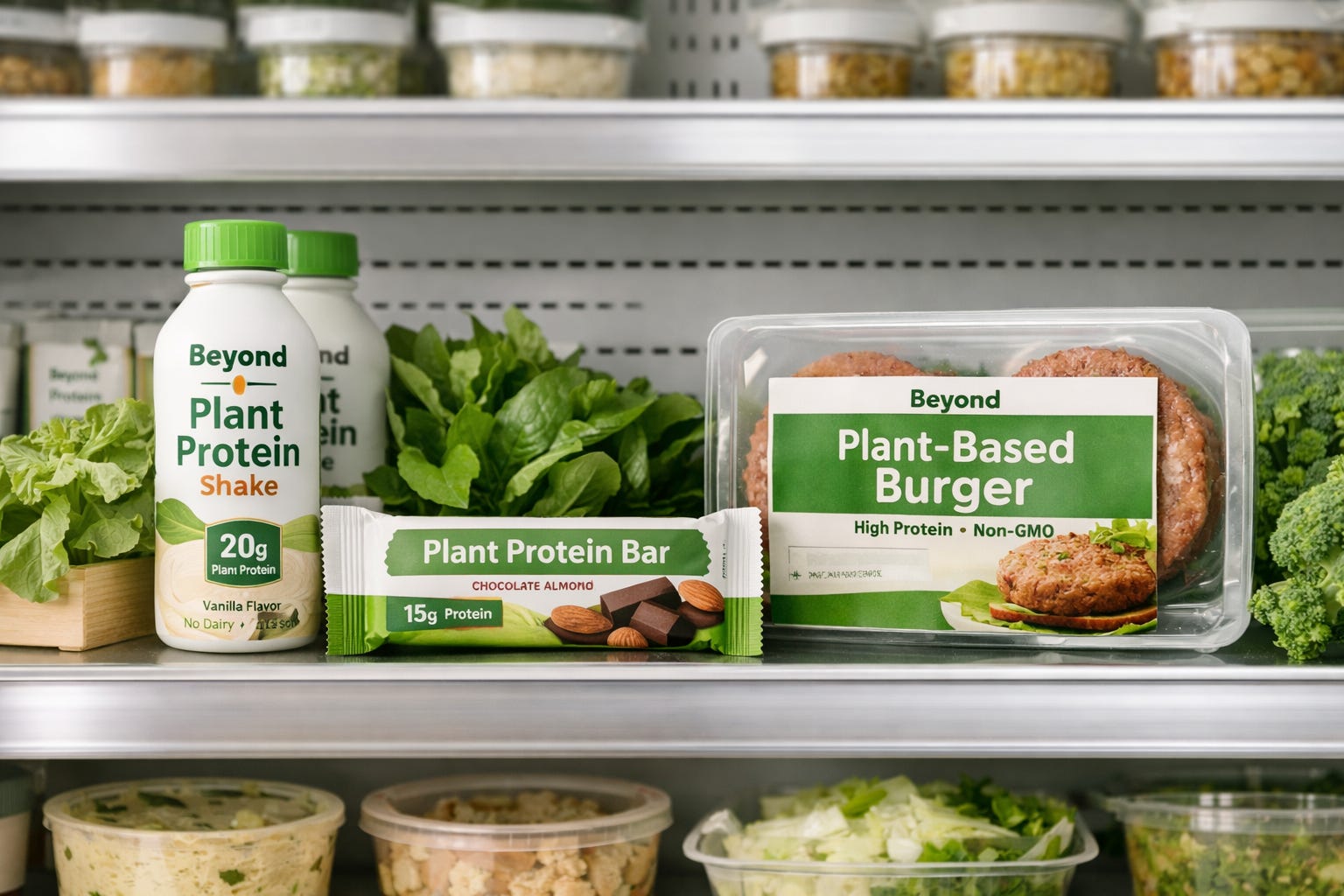
‘‘Beyond is also moving beyond burgers and sausages into
products like protein drinks and bars.’’
The brand that helped define the boom is changing
For years, Beyond Meat stood as one of the most visible symbols of the plant-based boom. Its burgers and sausages helped define an era when many people believed vegan food would go mainstream by closely imitating animal products. The strategy was simple, and for a while, it worked. If consumers wanted the taste, texture, and cultural familiarity of meat, the thinking went, then the best way forward was to offer them something that felt nearly identical, minus the animal.
Now that era appears to be changing.
Beyond has begun dropping the word “Meat” from its branding and repositioning itself more broadly as a plant protein company. It is also moving beyond burgers and sausages into products like protein drinks and bars. On the surface, that may look like a corporate pivot, the kind companies make when a category cools. But it may actually represent something far more important. It may be one of the clearest signs yet that vegan business is entering a more mature, more flexible, and ultimately more promising phase.
The first wave was powerful, but too narrow
That matters because the first chapter of the plant-based boom was always a little too narrow. It placed enormous symbolic weight on one type of product: the meat analog. Burgers became the face of the movement, and for understandable reasons. They were familiar. They were easy to compare. They gave journalists, investors, and consumers a simple before-and-after story. Here is the old version, here is the new one. Try them side by side.
But no food future, especially one as transformative as a vegan future, can rest on a single symbol forever.
The plant-based future was never going to be won by one burger.
Why the old formula started to strain
The plant-based meat category has been under pressure for some time. Consumers have raised concerns about cost, flavor, texture, and ingredient lists. Retailers have become more selective. The glow of novelty has faded. What once looked like an inevitable takeover now looks more like a difficult market correction. Yet that is precisely why Beyond’s rebrand is so interesting. It suggests the companies that survive this period will do so not by clinging to the old script, but by writing a better one.
And the better script may be this: plant protein does not need to win solely by pretending to be meat.
Beyond the aisle, beyond the imitation
That is a liberating idea. It opens the market far beyond the frozen burger aisle. It allows vegan business to enter the everyday flow of how people actually eat now, through drinks, snacks, prepared foods, simple staples, and performance nutrition. A person who may not be ready to swap a beef burger for a plant burger might still reach for a plant protein drink after a workout, or buy a protein bar for convenience during the day. That may not carry the dramatic symbolism of a burger showdown, but culturally and commercially, it may matter more.
This is where the Beyond story becomes unexpectedly hopeful.
A broader identity can be a stronger one
When a company built on meat imitation decides the word “meat” is too limiting, it tells us that the old category boundaries are starting to break down. The real future may not belong to companies that define themselves by what they are replacing. It may belong to companies that define themselves by what they are offering: nourishment, protein, convenience, health, and a lower-impact way of living.
That shift is important for another reason too. One of the recurring criticisms of plant-based meats has been the perception that they are overly processed or too complicated. Whether that critique is always fair is not the point. The point is that it has shaped consumer behavior. Beyond and other companies now seem to understand that ingredient simplicity matters. Cleaner labels matter. Familiar ingredients matter. Trust matters.
That is not a sign of weakness. It is a sign that the category is listening.
This is not the end of vegan innovation. It is the end of one narrow way of imagining it.
The next phase may be quieter, and stronger
Movements often begin with bold symbolic gestures. Markets, by contrast, survive through adaptation. The first wave of plant-based business was fueled by excitement, disruption, and the promise of dramatic substitution. The second wave may be less theatrical, but more grounded. It may focus less on spectacle and more on habit. Less on hype and more on integration. Less on trying to shock consumers into a new future, and more on quietly becoming part of daily life.
That could be a much stronger foundation.
This is what growing up looks like
There is a tendency, especially in moments of market slowdown, to mistake recalibration for failure. But not every retreat from hype is a retreat from truth. Sometimes it is the opposite. Sometimes it is the moment when an idea sheds what was too rigid or too optimistic and becomes more real. That may be what is happening now in vegan business. The early phase proved there was enormous interest in alternatives to animal products. The current phase is testing what forms of those alternatives people will actually keep buying, trusting, and incorporating into ordinary routines.
That is a necessary stage of development.
The real future is wider than one flagship product
In that sense, Beyond’s rebrand may be less about abandoning a mission than broadening it. The mission was never just to create a better burger. The deeper mission was to help build a food culture less dependent on animal exploitation and more open to plant-based abundance. If burgers were the gateway, fine. But they were never supposed to be the whole destination.
What makes this moment encouraging is that the destination now looks wider than before.
A resilient vegan marketplace will not depend on one flagship product. It will include many entry points. Some people will come through meat alternatives. Others will come through simpler whole-food options, protein beverages, functional snacks, or convenience products that fit easily into modern life. The important thing is not that every consumer takes the same path. It is that the plant-based world becomes large enough, diverse enough, and practical enough to meet people where they are while still moving culture forward.
That is how change deepens. Not all at once, and not always in the form we first expected.
A better question is opening up
So no, this is not the end of vegan innovation. It is the end of one narrow way of imagining it. The first chapter asked whether plant-based food could imitate the familiar. The next chapter asks whether plant protein can become familiar in its own right, not as a substitute, but as a category people genuinely want.
That is a better question, and a more exciting one.
The next phase of plant protein may be less flashy, but far more durable.
What happens next may matter more than the first boom
If Beyond is right, the future of vegan business will be broader than the burger, simpler in its presentation, and more embedded in everyday life. It may be less flashy than the first boom. It may attract fewer breathless headlines. But it could also be far more durable. And in the long run, durability matters more than buzz.
Because the real transformation was never going to come from one product alone. It was always going to come when plant-based eating stopped looking like an exception and started feeling normal.
This rebrand suggests that day may be closer than it seems.
What do you think?
Is this a retreat from the original promise of plant-based meat, or the beginning of a broader and more durable vegan marketplace?
Before you head out, hit the ❤️ and re-stack this post to amplify The Vegan’s Voice and bring this conversation to more people who need to hear it.
I know some may not want to commit to a paid subscription, but if you’d like to support my work, you can always buy me a coffee on Ko-fi. Your contribution helps sustain independent writing rooted in consciousness, compassion, and social renewal. Every bit of support truly makes a difference.
Nope. The market is awash with protein drinks and protein bars neither of which are needed or advisable anyway. This is not a sustainable venture in my mind.
Why are "vegan" foods needed. Vegan foods are vegetables, fruits, legumes, nuts, whole grains. There are thousands of whole, delicious, nutritious vegan foods in markets. They will not produce money for companies such as Beyond, they do not get the advertising that animal products and ultra-processed products get, but they are healthful, prevent animal harm and death, and are better for the environment. I think we can get around commercialization of unhealthy "food" and continue to promote the basis of veganism.
Very hopeful